This gentle story on bravery follows Prahlad as he stands calmly for what he knows deep inside to be true. In a palace ruled by fear and anger, his quiet steadiness becomes stronger than shouting or force.
The king’s voice could shake the walls of the palace. Prahlad had heard it do exactly that. Once, when a servant dropped a bronze bowl, and the king’s shout rang through three corridors before it faded. His father had a voice likethunder looking for somewhere to land.
Prahlad’s voice was quieter. Not because he was afraid to speak. Because there was something inside him that had no need to be loud.
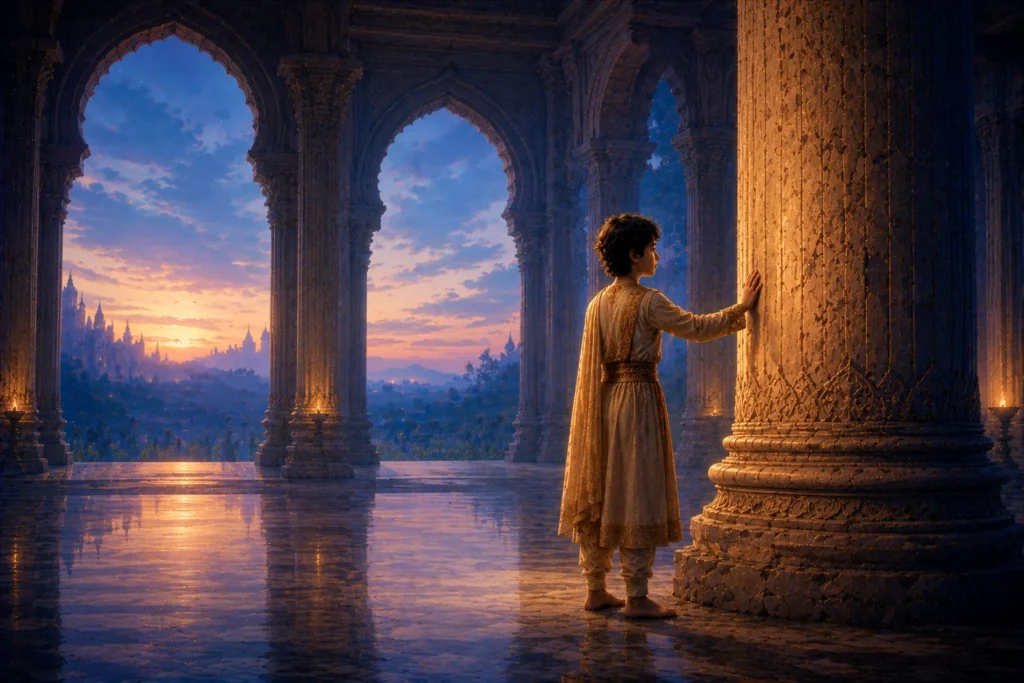
He didn’t know what to call it. It was simply there, the way warmth lives inside stone after a long afternoon of sun. You couldn’t see it. But if you put your hand against the stone, you knew.
His father called him to the great hall one evening, and the court went silent in the particular way it did when something important, or something terrible, was about to happen. The king looked down from his carved seat.
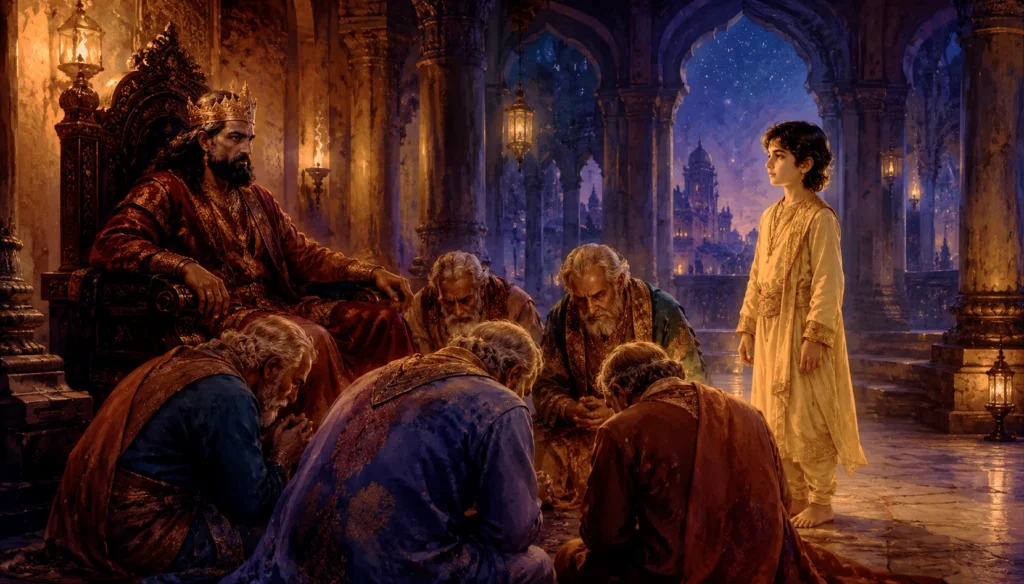
“Who is the greatest power in all the worlds?” he asked.
It was a question with an expected answer.
Prahlad was quiet for a moment. Not the silence of fear. The silence of someone listening to what lives beneath thought.
“The thing that holds everything,” he said.
The king’s eyes narrowed. “And is that me?”
“No,” said Prahlad. Simply. Without malice. The way you might say no, that’s not north when someone is pointing the wrong direction.
What followed was not quick. It never is, when someone powerful discovers they cannot move what will not be moved. There were punishments: rooms without light, days without food, words designed to cut. Each one landed on Prahlad as rain lands on deep water: a ripple, and then still. He did not harden. He did not rage. He simply remained.
The king sent his son away to teachers who might fix what was wrong with Prahlad. The teachers sent him back.
One teacher said only this, to no one in particular: “He already knows what he knows. There is nothing to undo.”
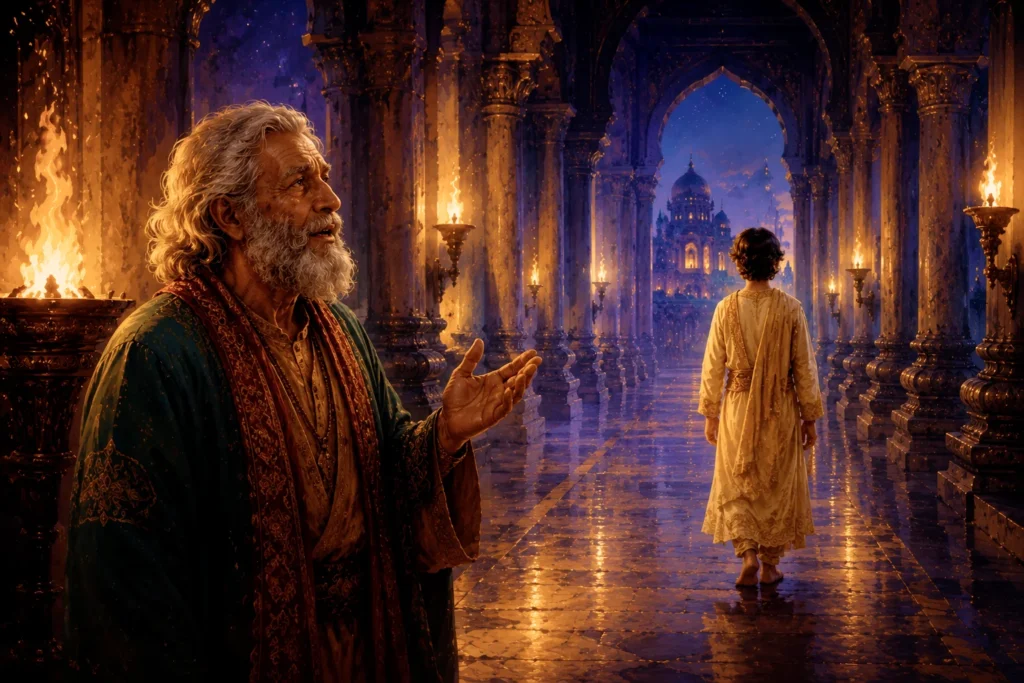
That night, the king called Prahlad to the hall. Just the two of them.
“You make me look weak,” the king said.
Prahlad said nothing.
“Say that I am the greatest power. Say it once. That is all I ask.”
Prahlad looked at his father for a long moment, not with defiance, not with pity, but with something that may have been the hardest thing of all to receive: simple steadiness.
“I cannot say what isn’t true,” he said quietly.
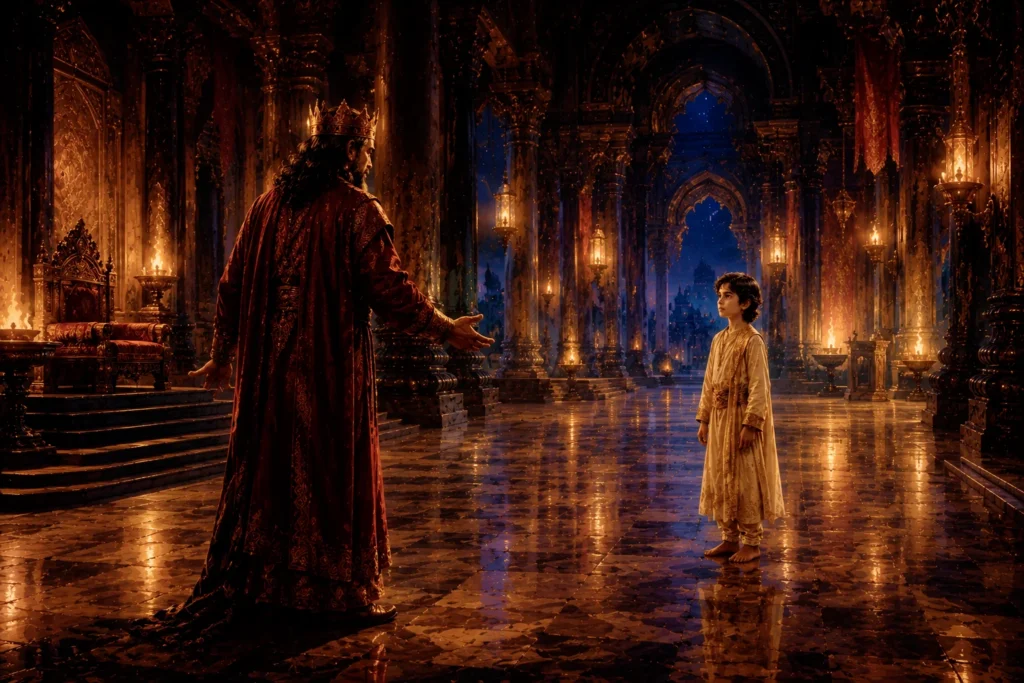
“This thing that holds everything,” the king said. “Where is it? Is it in this hall? Is it in this pillar?”
“It is everywhere,” said Prahlad. “In the stone. In the air. In you.”
The king turned to the great pillar. “Then show yourself,” he said. “If you are real, show yourself.”
Something entered the hall. The king fell back.
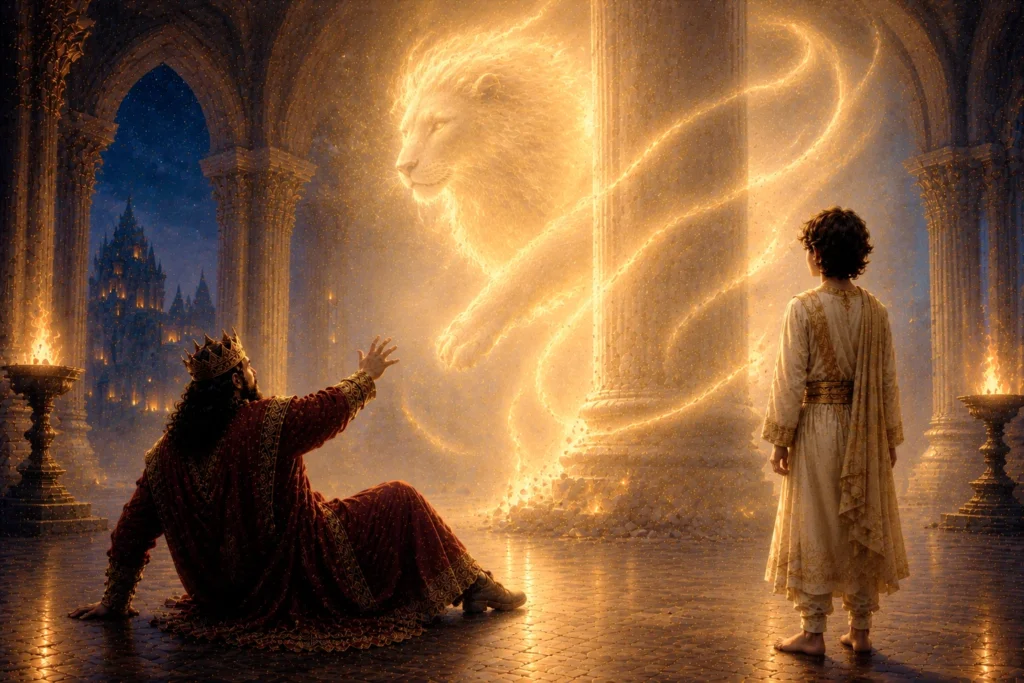
Prahlad stayed where he was.
When it was over, the hall was quiet.
It had been asked to show itself, and it had. The light folded back into the stone, and the warmth stayed.
The king sat on the floor of his own hall, not on his carved seat, but on the floor, and he looked at his son across the space between them.
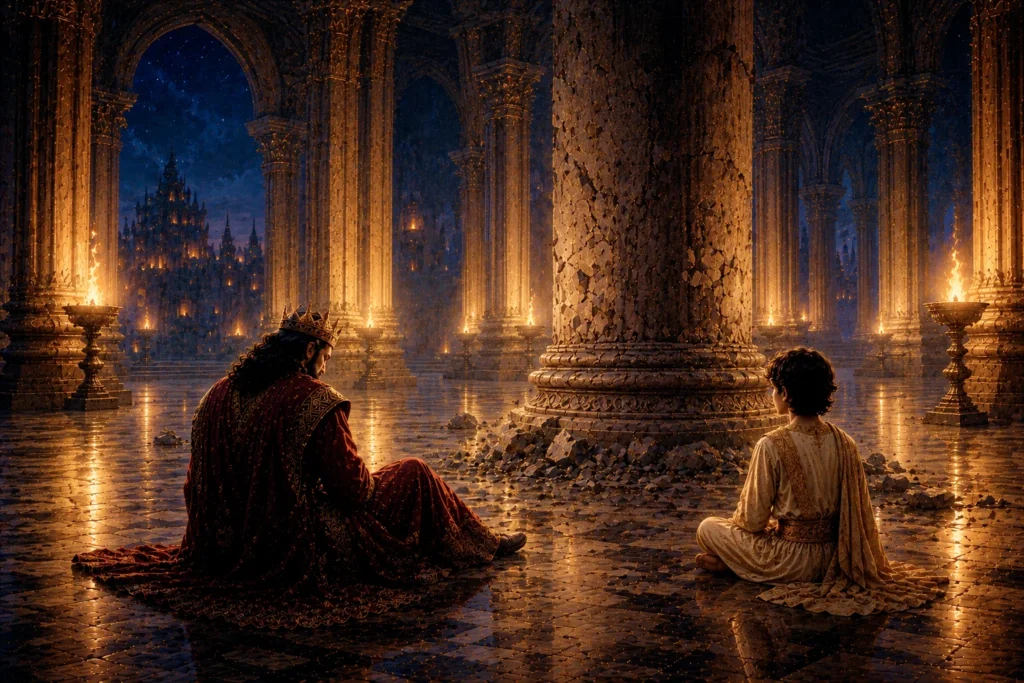
Prahlad walked to his father and sat beside him.
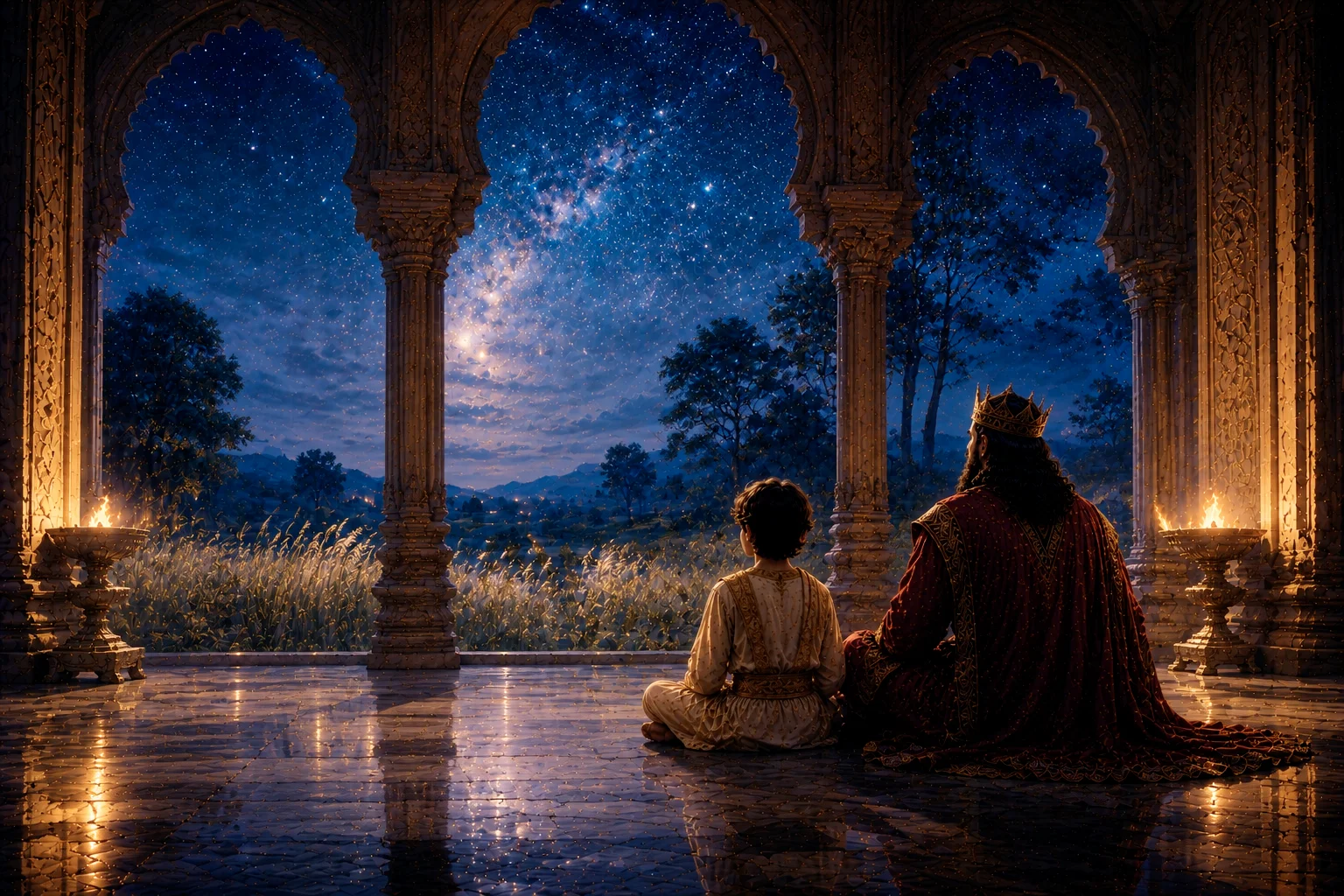
They stayed like that for a while. The torches burned. Outside, the night continued in its ordinary way: crickets, wind, the slow turning of stars.
After a long time, the king said, “What do you want?”
Prahlad was quiet. Listening, as he always listened, to the thing beneath thought.
“Only that you find some peace,” he said.
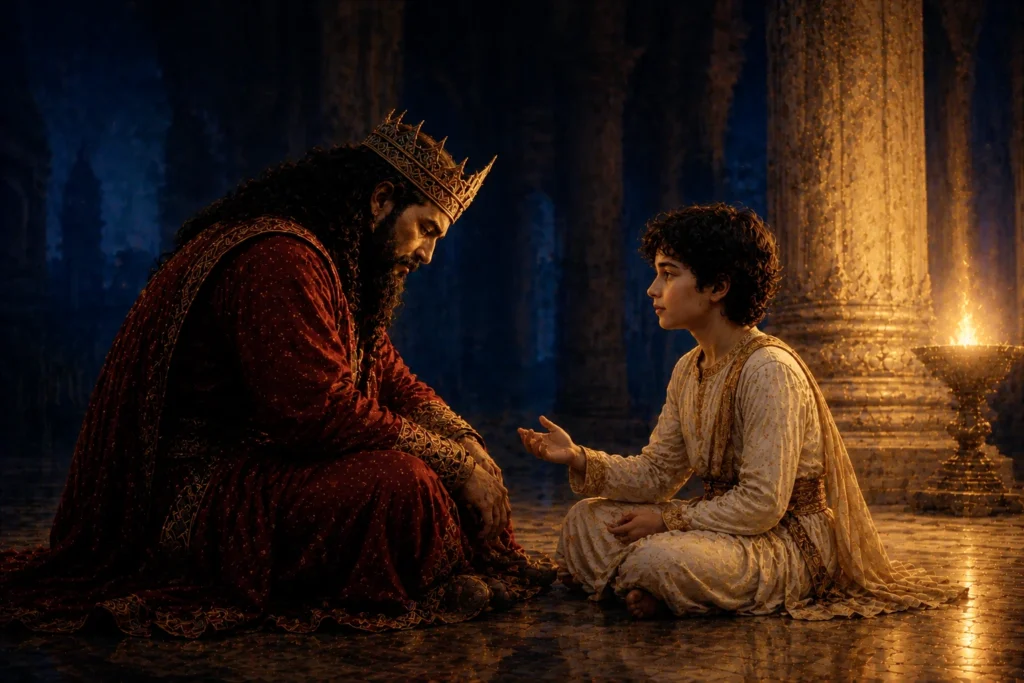
No one heard this but the two of them. And the hall. And what had been in it.
Prahlad put his hand against the great pillar. It was warm, the way stone is warm after a long afternoon of sun. The way old things are warm when they have been holding for a very long time.
He left his hand there a while.
Then he let it rest.
The End