
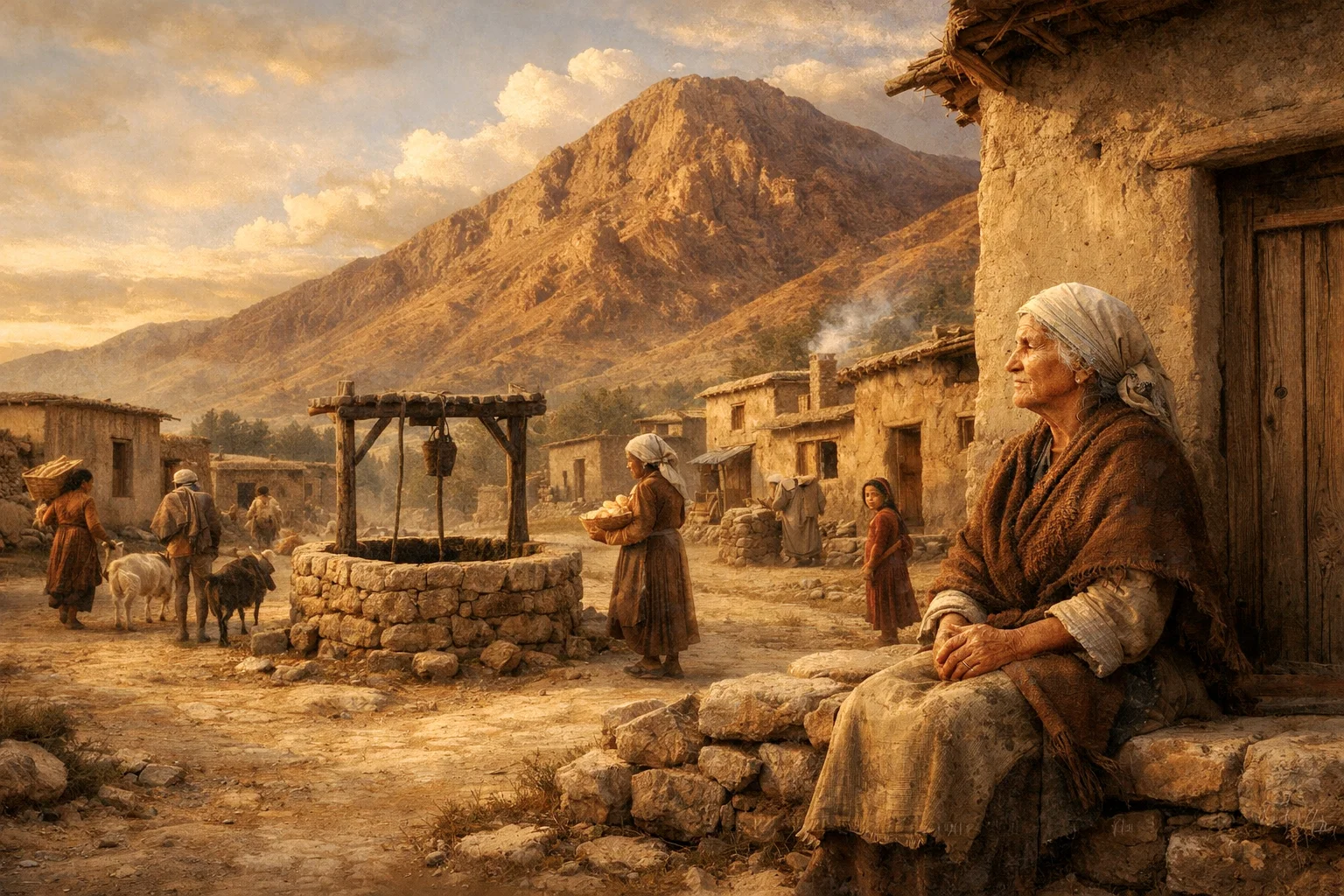
In a village where everyone is busy, one woman does nothing at all — and somehow, everything depends on her. This short wisdom story follows Kesi, a girl who notices what others miss, and slowly learns that stillness is not emptiness but presence. A quiet, layered tale for children who are ready to sit with a question.
In a village at the foot of a brown mountain, there lived a woman who did nothing.
She had no shop. She grew no crops. She mended no shoes and taught no lessons. Every morning she walked to the stone well at the center of the village, filled her clay jug, and carried it home. Every evening she sat on the low wall outside her door and watched the sky change. That was all.
The children of the village called her Old Sit-Still. The merchants ignored her. The elders, when they spoke of her at all, said she was harmless.
A girl named Kesi noticed her, though.
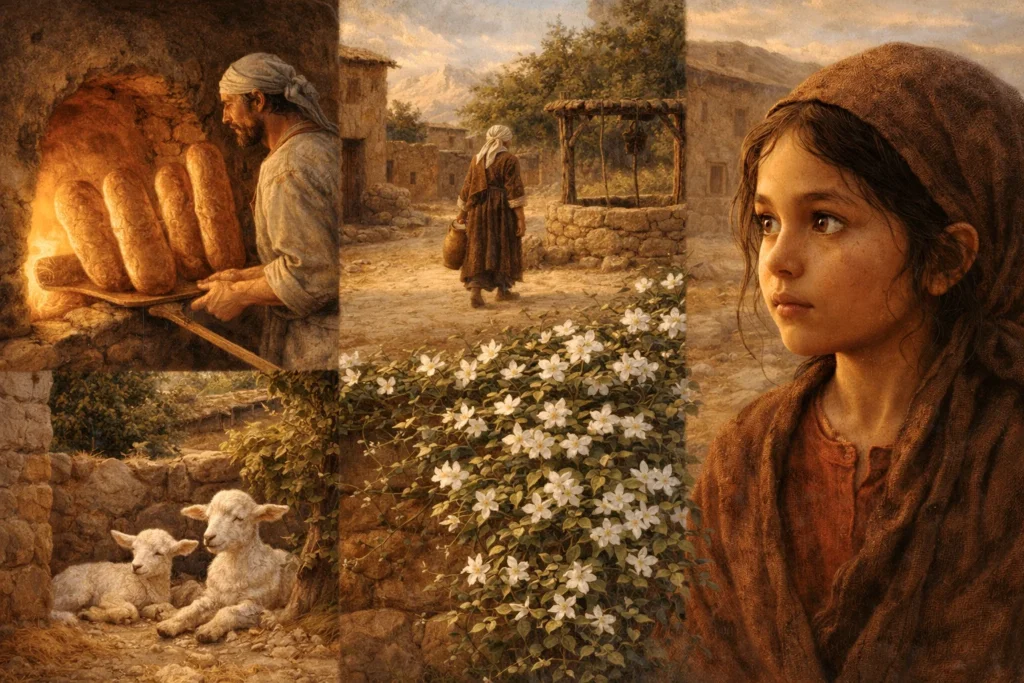
Kesi noticed things. She noticed that the baker’s bread rose higher on the days Old Sit-Still walked past his window. She noticed that the baby goats in the yard next door stopped bleating when the woman sat on her wall. She noticed that the jasmine vine near the well—the one that had been dry and brown for a whole season—had started blooming again, quietly, without anyone watering it.
“What do you do all day?” Kesi asked her once, standing at the wall with her arms crossed.
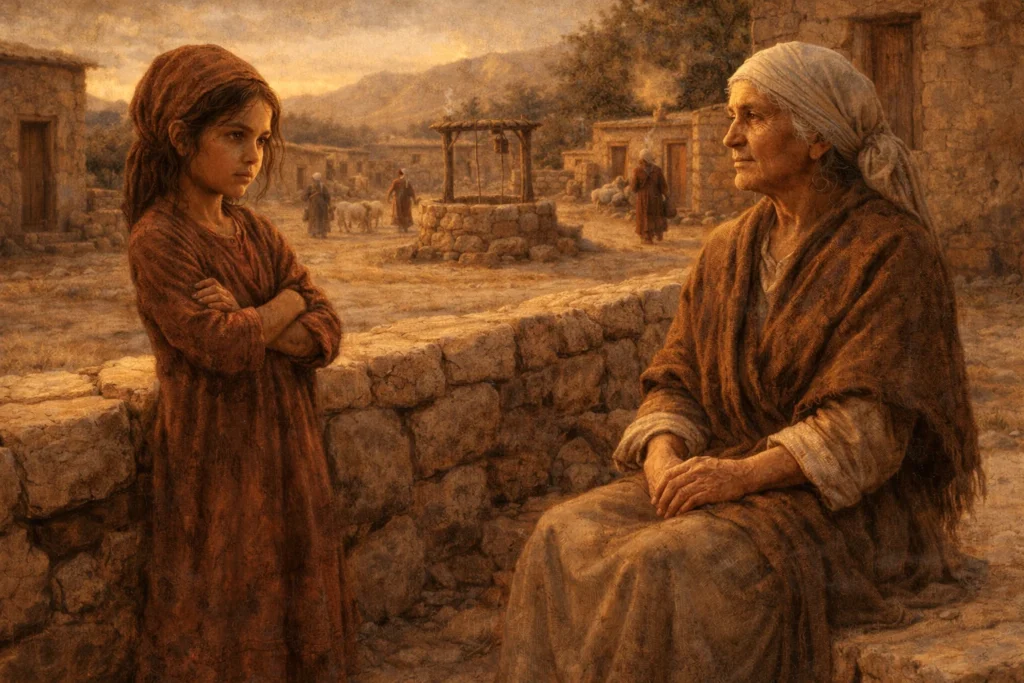
The woman looked at her with eyes that were dark and unhurried. “I sit,” she said.
“That isn’t doing anything.”
“No,” the woman agreed. “It isn’t.”
Kesi walked away, annoyed. She had things to do. She had goats to feed and water to carry and an older brother who took up too much space and a mother who was always tired. The world was loud and full of tasks, and sitting on a wall seemed like a waste of a perfectly good pair of hands.
Then one morning, Old Sit-Still was gone.
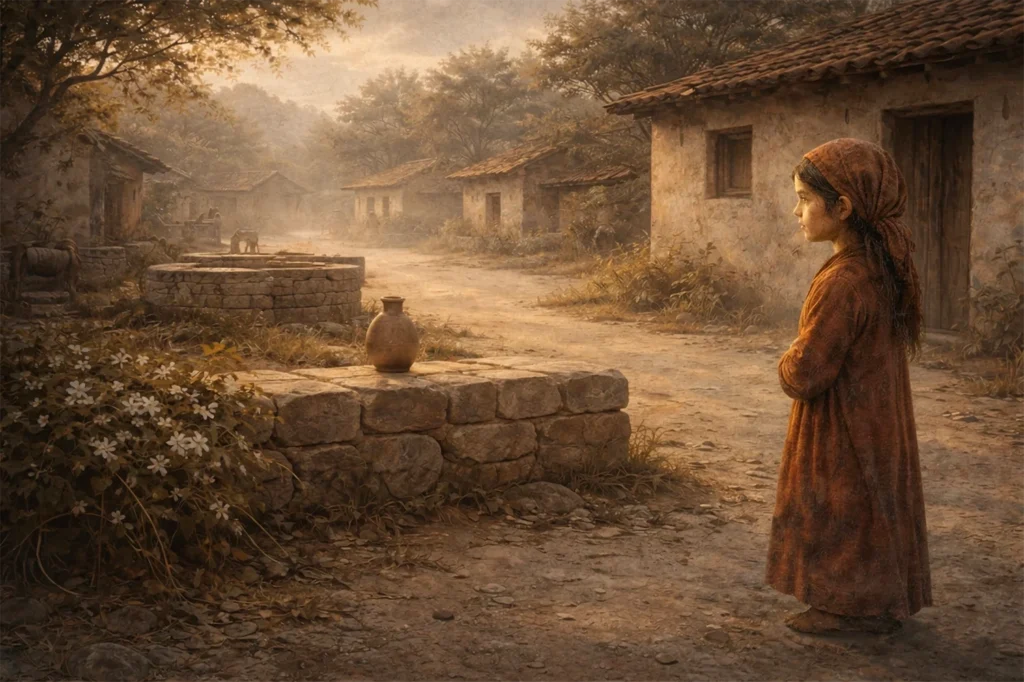
No one saw her leave. Her door was closed. Her clay jug sat empty by the well. The low wall where she always sat held nothing but the faint warmth of old stone.
At first, no one cared. The village went on. The baker baked. The goats bleated. The elders talked. Everything was the same.
Except it wasn’t.
The baker’s bread fell flat three days in a row. He cursed his flour, cursed his oven, cursed the weather. The baby goats cried through the night and would not be soothed. The jasmine vine by the well curled in on itself and turned the color of rust. Two neighbors who had been friends for twenty years began arguing over a fence post. A strange hot wind blew through the village and did not stop.
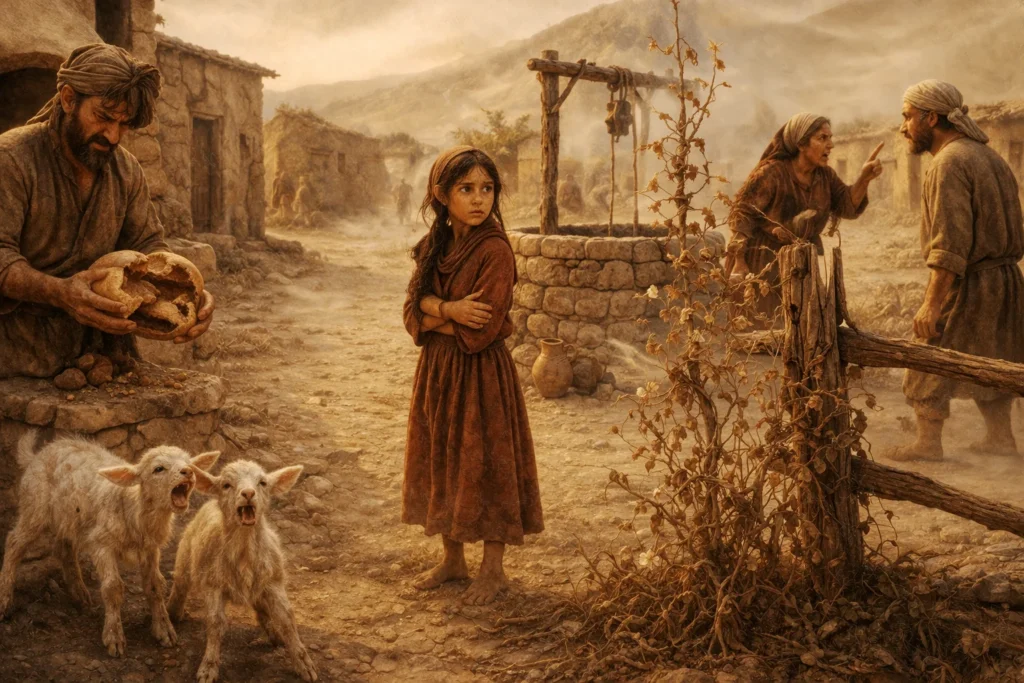
Kesi felt it too—a tightness behind her ribs, a restlessness she couldn’t name. Everything she touched seemed to go wrong. The water she carried sloshed over the rim. The rope she braided came undone. Her brother’s voice grated on her like sand on teeth, and when her mother asked her to sweep, she threw the broom against the wall so hard the handle cracked.
She sat on the ground afterward, breathing hard, ashamed and confused.
And she thought of Old Sit-Still.
She thought of the way the air around that woman always felt cooler, the way conversations near her seemed to slow down and find their footing, the way even the dust in the road appeared to settle when she passed.
Kesi stood up. She walked to the woman’s house and pushed open the door.
Inside, it was nearly empty. A sleeping mat. The clay jug. A single oil lamp, unlit. And on the wall, scratched into the plaster with something sharp, three words Kesi did not understand:
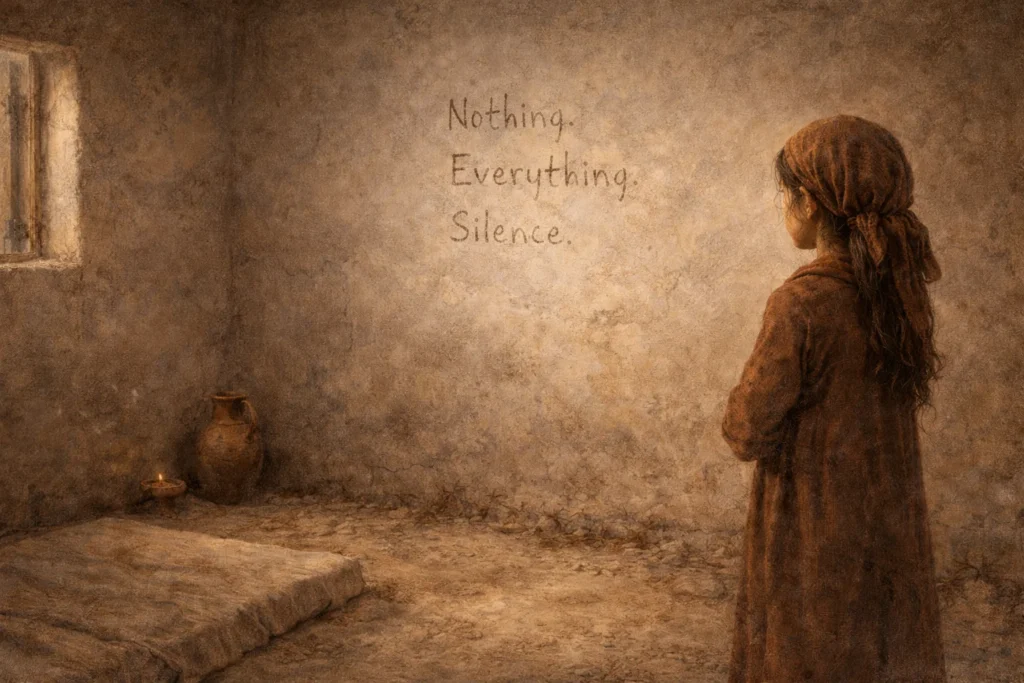
Nothing. Everything. Silence.
She stared at them for a long time.
Then she walked outside, sat down on the low wall, and did nothing.
She just sat. The hot wind pushed against her. The village noise swirled—dogs barking, a cart wheel squeaking, someone shouting about the goats. Kesi sat with her hands in her lap and let it all move around her like water around a stone.
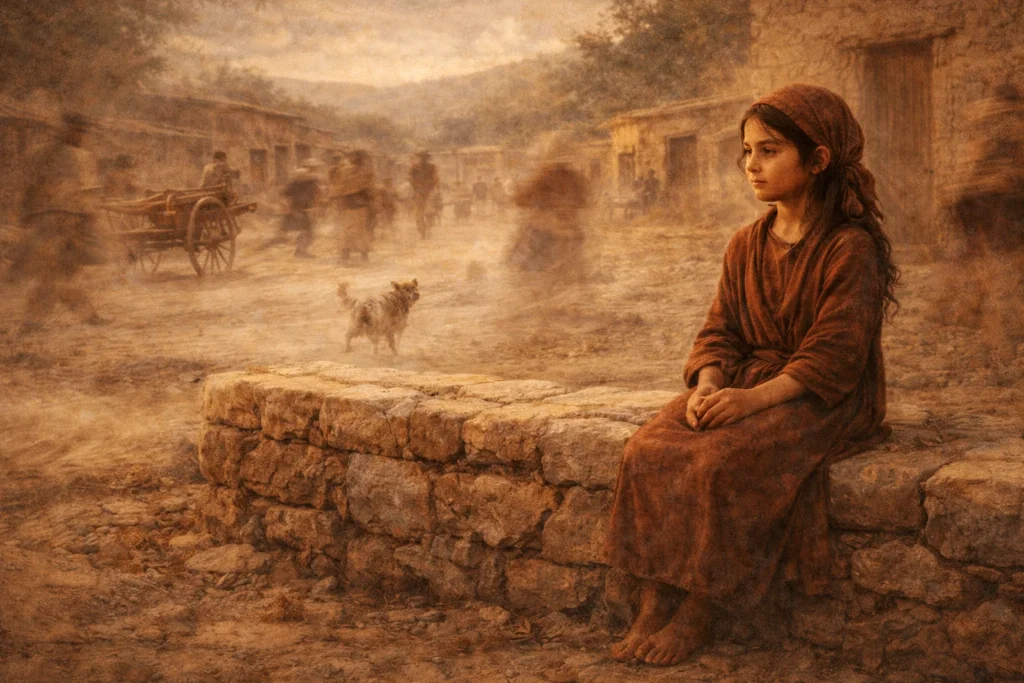
She did not try to fix anything. She did not try to feel calm. She just stayed.
Something shifted. Not in the village—in her. The tightness behind her ribs loosened, just slightly, the way a knot loosens when you stop pulling at it and simply hold the rope still.
The hot wind paused. Just for a moment. Just long enough for Kesi to feel the cool evening air underneath it, the air that had been there all along, waiting.
She sat until the sky turned the color of embers, and then the color of ash, and then the deep, quiet blue that comes before the stars.
The jasmine vine did not bloom that night. The baker’s bread did not rise. The goats still cried.
But Kesi came back the next evening. And the next.
She did not tell anyone why. Some things are too strange to explain—how sitting still on a wall could feel like the most important work in the world. How doing nothing could feel like holding something vast and invisible in your lap, something that had weight and warmth and needed tending.
On the fourth evening, she noticed the jasmine vine had opened one small, white flower.

On the seventh evening, the goats slept through the night.
She never saw Old Sit-Still again. She did not need to. The wall was warm, and the evening air was cool, and somewhere between nothing and everything, there was a silence that held the whole village like a cupped hand holds water—gently, so gently, so that not a single drop is lost.
See our complete collection of early reader audio stories for bedtime